The best weightlifting shoes (2026)
Six weightlifting shoes compared on what their makers publish: heel lift, stack, weight, materials, warranty, price and size run. The Nike Romaleos 4 leads on warranty, price and stock. It is also one of the shoes that prints no heel height.
By Dana Whitlock, editor-in-chief
- Sheet checked
- Updated
Affiliate disclosure Some buy links on this page pay us a commission. It never changes a score, a rank or a printed con. Full policy.
Short answer
Six weightlifting shoes compared on what their makers publish: heel lift, stack, weight, materials, warranty, price and size run. The Nike Romaleos 4 leads on warranty, price and stock. It is also one of the shoes that prints no heel height.
9.0 /10 Nike Romaleos 4 $200
Shortlist rule
Shoes sold new as weightlifting or lifting shoes with a raised heel, listed with a price on the maker's own US site on 2026-11-25, current generation only, one model per product line.
- Sheet checked
- 9
- Ranked
- 6
- Excluded
- 3
The ranking
Prices checked 2026-11-25| Rank | Product | Score | Price | Award |
|---|---|---|---|---|
| 01 | Nike Romaleos 4 Best for Olympic lifting and squat-heavy programs | 9.0 | $200 | — |
| 02 | adidas Adipower Weightlifting 3 Best for Ankle-limited Olympic lifters who want the figure before they buy | 8.4 | $230 | — |
| 03 | adidas Powerlift 5 Best for Powerlifters and first-time buyers who want a moderate heel for little money | 8.3 | $120 | — |
| 04 | NOBULL Lifter Best for Lifters who want leather and every figure in writing | 7.9 | $170 | — |
| 05 | Reebok Legacy Lifter IV Best for Lifters who want a strapped lifter and can buy it on a Reebok markdown | 7.8 | $225 | — |
| 06 | Nike Savaleos Best for Budget buyers who want Nike's warranty and returns | 7.7 | $130 | — |
How this list works
This is a spec-sheet desk. We read the official product page for every shoe on 2026-11-25, took the figures each maker publishes, and compared them. We did not buy, wear or measure these shoes, and no figure on this page comes from anyone but the maker. Where a maker publishes nothing, the table says “not stated.”
The shortlist rule: shoes sold new as weightlifting or lifting shoes, with a raised heel, listed with a price on the maker’s own US site on the day we checked, current generation only, one model per product line. Six made it. Three did not, and the reasons are listed below the table.
Scores are editorial and explained in two sentences on each review. Build weighs what the maker commits to on paper: heel and stack figures, the closest thing a shoe has to a tolerance, plus materials and warranty length. Value weighs the list price against that. Use weighs fit notes, closure and stock.
The shortlist
Nike Romaleos 4, $200, 9.0. Nike’s page states wide straps over the laces, a rigid midsole with a heel lift, a wide heel and rubber tread. It states no heel height and no weight. It leads because of what Nike backs: two years from manufacture against defects, 60-day returns, and sizes from men’s 3.5 to men’s 18 in four colorways on the day we checked. It is $30 under the Adipower 3. The con is the blank where the heel figure should be.
adidas Adipower Weightlifting 3, $230, 8.4. The highest stated heel lift in the group, 22 mm on a 35 mm stack, with a textile upper, a strap over the laces and a true-to-size fit. It is also the most expensive at list, and adidas US covers defects for 12 months. Sale prices vary by colorway; we score on list.
adidas Powerlift 5, $120, 8.3. The best value on paper. adidas states the whole profile: 34 mm under the heel, 18 mm under the forefoot, a 16 mm drop and 436 g. The upper is canvas with open-mesh inserts, closed by laces and a hook-and-loop instep strap over a midsole wedge. The lift is the lowest stated here, which suits low-bar and powerlifting squats more than the snatch. Same 12-month claim window as the Adipower.
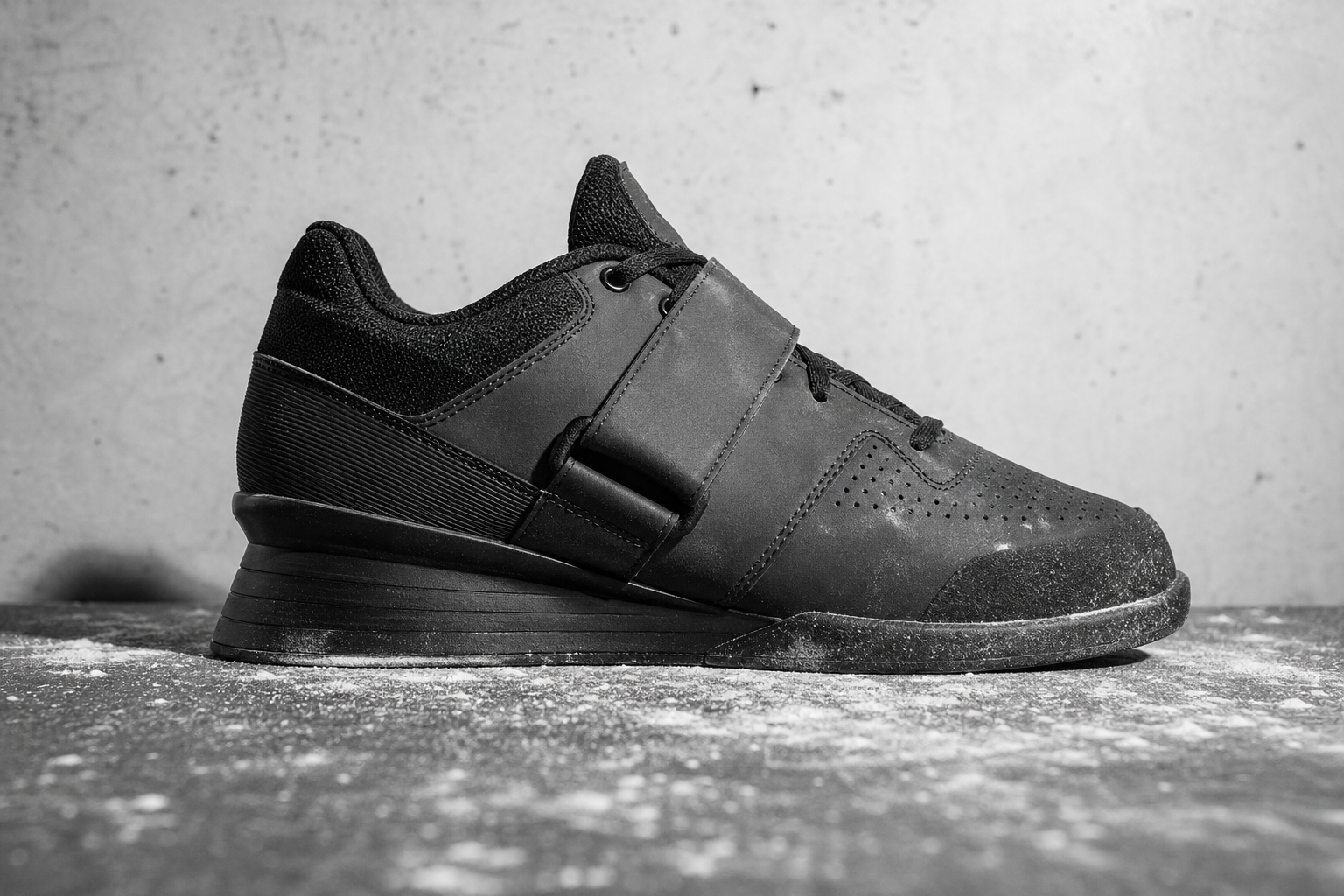
NOBULL Lifter, $170, 7.9. The fullest spec sheet in the group: 10.5 and 29 stack, 18.5 drop, 498.9 g for a men’s 9, top-grain leather, stacked leather heel. NOBULL prints the stack and drop without units. It is the heaviest stated weight here, and the warranty is one year.
Reebok Legacy Lifter IV, $225, 7.8. Reebok states a Flexweave engineered mesh upper with Comfort Pad foam, an Evo strap closure, a standard width and a rubber outsole with a 33 mm heel clip. It does not state the effective heel lift, the weight or a footwear warranty term. Reebok has listed it well below $225 on its own sale pages, which is when it makes sense.
Nike Savaleos, $130, 7.7. Nike’s entry lifter: a single hook-and-loop strap, an elevated heel, a padded mesh inset at the heel and the same two-year Nike warranty and 60-day returns as the Romaleos 4. Nike states no heel height, no weight and no materials, and says it fits small.
What the spec sheets leave out
Three of the six shoes have a published heel lift. Two have a published weight. One has a named heel material. The single figure that defines a lifting shoe is missing from the pages of the category leader, Nike, and from Reebok’s. If the exact lift matters to you, choose among adidas and NOBULL, or ask the maker before you order.
Warranties vary more than prices. Per year of stated defect cover, the Romaleos 4 costs $100, the Savaleos $65, the NOBULL Lifter $170, the Powerlift 5 $120 and the Adipower 3 $230. Reebok’s cannot be calculated, because Reebok does not state a term.
How to choose
If your ankles limit your squat and you lift the Olympic lifts, buy the Romaleos 4 for the warranty or the Adipower 3 for the 22 mm in writing. If you powerlift and want a heel for squats only, the Powerlift 5 at $120 covers it. If you want leather, the NOBULL. If you only need a shoe for deadlifts, none of these: read our Converse Chuck Taylor review.
Rank 1: Nike Romaleos 4
Best for Olympic lifting and squat-heavy programs
The safest buy: two-year defect warranty, 60-day returns and sizes from men's 3.5 to 18 for $200. Nike prints no heel height or weight.
Pros
Cons
Price checked 2026-11-25
Rank 2: adidas Adipower Weightlifting 3
Best for Ankle-limited Olympic lifters who want the figure before they buy
The most heel in writing: a stated 22 mm lift on a 35 mm stack. Highest list price in the group and a 12-month claim window.
Pros
Cons
Price checked 2026-11-25
Rank 3: adidas Powerlift 5
Best for Powerlifters and first-time buyers who want a moderate heel for little money
A full spec sheet for $120: 34 mm heel, 18 mm forefoot, 16 mm drop, 436 g. Lower lift, canvas and mesh upper, one instep strap.
Pros
Cons
Price checked 2026-11-25
Rank 4: NOBULL Lifter
Best for Lifters who want leather and every figure in writing
Leather upper, stacked leather heel, an 18.5 drop on a 29 over 10.5 stack. Heaviest stated weight here at 498.9 g, one-year warranty.
Pros
Cons
Price checked 2026-11-25
Rank 5: Reebok Legacy Lifter IV
Best for Lifters who want a strapped lifter and can buy it on a Reebok markdown
Flexweave upper, Evo strap, rubber outsole with a 33 mm heel clip. No effective heel lift, no weight and no footwear warranty term published.
Pros
Cons
Price checked 2026-11-25
Rank 6: Nike Savaleos
Best for Budget buyers who want Nike's warranty and returns
Nike's cheaper lifter: one hook-and-loop strap, an elevated heel and the same two-year warranty for $130. No heel figure, and it fits small.
Pros
Cons
Price checked 2026-11-25
What we excluded and why
3 cut-
Converse Chuck Taylor All Star
No raised heel, and Converse sells it as a casual shoe. It is a real option for deadlifts and low-bar squats, and we cover it in its own review.
-
Reebok Legacy Lifter III
Previous generation. Reebok still lists it at $220 with markdowns, but the Legacy Lifter IV replaces it.
-
NOBULL Canvas Lifter
Same product line as the leather Lifter we list, and NOBULL publishes no stack, drop or weight for it, so there is nothing on paper to compare.
Questions
Do I need weightlifting shoes?
Not to start lifting. A raised heel helps when ankle range limits how upright you can squat: Sato and colleagues, in the Journal of Strength and Conditioning Research in 2012, found less forward trunk lean in weightlifting shoes than in running shoes at 60% of one-repetition maximum. If you reach depth flat-footed with the bar over the midfoot, a flat shoe is a reasonable answer. Our heel raise guide has a wall test you can do at home.
How much heel should I get?
The makers that publish a figure range from 16 mm on the adidas Powerlift 5 through 18.5 on the NOBULL Lifter to 22 mm on the adidas Adipower 3. Over a typical adult foot, that whole range is about 2 degrees of ankle angle. Start near the middle if you have never squatted in a heel, and go to 22 mm if you are an Olympic lifter whose ankles are the limit.
Can I deadlift in weightlifting shoes?
You can, but a raised heel and a thick stack add distance the bar has to travel to lockout, and most lifters pull in a flat shoe. The cheapest flat option we cover is the Converse Chuck Taylor at $60 to $65.
Do weightlifting shoes run true to size?
It depends on the maker. Nike says the Romaleos 4 and the Savaleos fit small and recommends half a size up. adidas states the Adipower 3 and the Powerlift 5 as true to size. Converse says the Chuck Taylor runs large. Reebok lists the Legacy Lifter IV in a standard width.
Which weightlifting shoe has the best warranty?
On the makers' own terms, Nike: two years from the manufacture date against material or workmanship flaws, with 60-day returns, for both the Romaleos 4 and the Savaleos. NOBULL covers the Lifter for one year from purchase. adidas US accepts defect claims within 12 months. Reebok publishes no footwear warranty term and routes defects through customer service, with 30-day returns on unworn shoes.
Prices checked . Prices move faster than steel; scores and ranks do not move with them. Sheet checked and updated dates are printed at the top of the page and are separate from this one.
Sheet checked and written by
Editor-in-chief
Twelve years in trade publishing, eight of them running gear desks. Signs every roundup and the corrections log, and decides when a test is finished.
How Dana tests →Spotted a wrong number? Tell the desk. Fixed within two business days and logged on the corrections page.