NOBULL Lifter (leather)
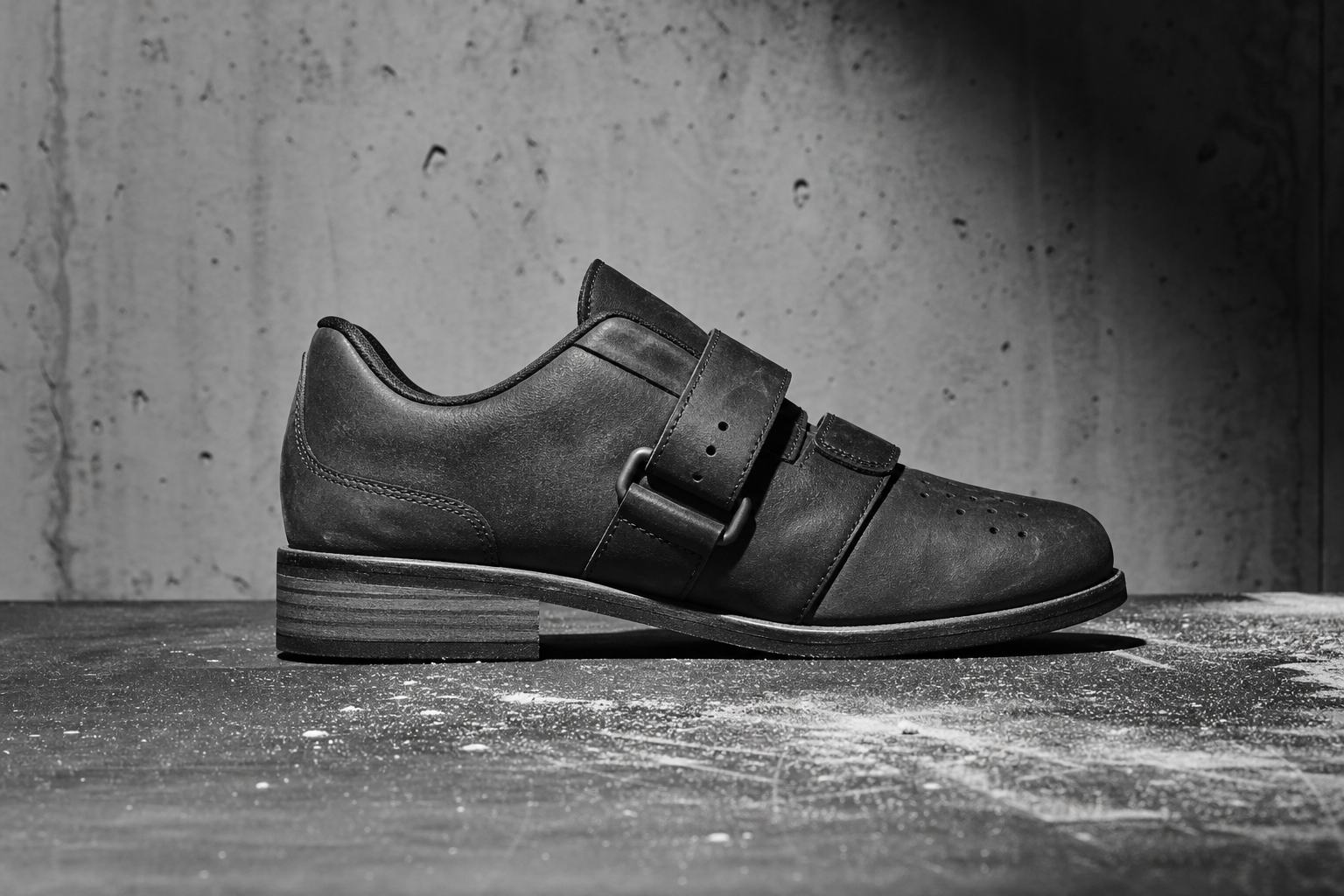
NOBULL's leather Lifter, read off the maker's spec sheet: top-grain leather upper, stacked leather heel, an 18.5 drop on a 29 over 10.5 stack, 498.9 g for a men's 9, $170 list and a one-year warranty. The fullest spec sheet in our shortlist, printed without units.
By Hannah Kessler, reviews editor
- Sheet checked
- Updated
Affiliate disclosure The buy link on this page may pay us a commission. Commission never changes a score, a rank or a printed con. Full policy.
Verdict
The most complete spec sheet of any lifter we compared, on a traditional leather build with a moderate 18.5 drop. It is also the heaviest shoe with a stated weight, at 498.9 g for a men's 9, and its warranty runs one year.
The sheet
NOBULL prints more about the Lifter than any rival prints about its shoe: a stack of 10.5 and 29, a heel-to-toe drop of 18.5, a weight of 17.6 oz or 498.9 g for a men's 9, a top-grain leather upper, a stacked leather midsole and a one-year warranty. The stack and drop figures carry no unit; they read as millimetres. At $170 list it sits between the $120 Powerlift 5 and the $200 Romaleos 4.
What the maker states
NOBULL sells two shoes under the Lifter name. The leather Lifter is the one with a spec sheet, and it is the one this page covers. The Canvas Lifter, also listed at $170, is described as an anatomical lifting shoe with an elevated heel and a roomy toe box, but NOBULL publishes no stack, drop or weight for it. We do not carry the leather figures over to the canvas shoe.
The leather Lifter’s spec block reads: stack height 10.5/29, heel-to-toe drop 18.5, weight 17.6 oz or 498.9 g for a men’s 9. Those three lines are more than Nike prints for the Romaleos 4 and more than adidas prints for the Adipower 3. The figures are internally consistent: 29 minus 10.5 is 18.5. NOBULL leaves the units off. Read as millimetres, which is the only reading that fits a lifting shoe, that is a 29 mm heel stack and a 10.5 mm forefoot.
Materials, as stated: “hand-selected top-grain leather” on the upper and a “stacked leather midsole” forming the raised heel. That is the traditional construction for a lifting shoe, and NOBULL is the only maker in our shortlist that names the heel material at all.
Warranty: one year, stated on the product page. NOBULL’s warranty page puts it as replacing any item that fails to perform as intended within one year of purchase, with proof of purchase required. Wear from normal use, personal preference and misuse do not qualify, and each claim is reviewed case by case. Returns run 30 days, and NOBULL accepts defective items within 30 days of delivery even if worn. Pairs bought between 1 November and 25 December 2026 can be returned through 31 January 2027.
Price: $170 list for the men’s Lifter. NOBULL marks lifters down often, but we score on the list price.
What to watch
The weight. 498.9 g for a men’s 9 is the heaviest stated weight in our shortlist, 62.9 g more than the adidas Powerlift 5’s 436 g. Nike and Reebok do not state weights, so the comparison is only against the makers who do. Under a barbell, weight matters less than it does in a trainer. For a lifter who moves the feet fast in a split jerk or a pull under, the extra grams are still worth knowing about.
The units. A spec sheet with no units is a spec sheet that has to be interpreted. The arithmetic works in millimetres, and no other unit makes sense for a 29 at the heel. It is still a figure printed less carefully than adidas’ “35 mm” and “22 mm.”
Leather. A leather upper gives with wear, so a Lifter that fits snugly on the first day will be a little looser after months of use. Size for a firm fit, not a tight one, and expect the break-in. The stacked leather heel is a natural material in the one place a lifting shoe most needs to stay the same height. Keep it out of wet gym bags and off damp garage floors, and let it dry away from direct heat if it gets wet.
The warranty. One year from purchase is half of Nike’s two years from manufacture, and the exclusions are wide: normal wear, preference and misuse are all out. At $170, that works out to $170 per year of stated cover, against $100 for the Romaleos 4.
The canvas sibling. If the Canvas Lifter’s lower weight or price draws you, remember that NOBULL publishes nothing about its heel. A shoe sold as a lifter with no stated heel figure is a guess.
Who it is for
Lifters who want a leather lifting shoe on a stacked leather heel, the traditional build for the category, and who want the figures in writing before they order.
Lifters who want a moderate heel. The stated 18.5 drop sits between the Powerlift 5’s 16 mm and the Adipower 3’s 22 mm. That suits a high-bar squatter who wants more lift than a powerlifting shoe without going to the top of the range.
Buyers who compare on paper. The Lifter’s spec sheet lets you check heel stack, forefoot stack, drop and weight against any shoe whose maker publishes the same lines. No other shoe in our shortlist allows all four comparisons.
It is a weaker choice for lifters who train in damp spaces, for those who want the lightest shoe that states its weight, and for anyone who weighs warranty above construction. At $170 with one year of cover, the Romaleos 4 at $200 with two years is the better after-sale bet.
The verdict
The NOBULL Lifter has the most complete spec sheet of any lifting shoe we compared: stack, drop, weight, upper material and heel material, all stated. The figures add up. The construction is traditional leather on a stacked leather heel, with a moderate 18.5 drop.
The cons come from the same sheet. 498.9 g is the heaviest weight any maker in our shortlist states. The stack and drop carry no units. The warranty runs one year with broad exclusions, and leather needs to be kept dry.
Score 7.9. Build 8.4: the fullest stated spec in the group, held back by the missing units and the one-year term. Value 7.8: $170 against one year of cover. Use 7.6: heavy, and built from leather that needs a break-in and has to be kept dry. Buy it for the leather and the numbers. Buy the Romaleos 4 for the warranty.
Specs and measurements
| Measure | Value |
|---|---|
| Heel-to-toe drop | 18.5, stated; no unit printed, reads as mm |
| Stack height | 10.5 forefoot, 29 heel, stated; no unit printed, reads as mm |
| Weight | 17.6 oz, 498.9 g for a men's 9, stated |
| Upper | Top-grain leather, stated |
| Heel | Stacked leather midsole, stated |
| Warranty | 1 year from purchase, stated |
| Returns | 30 days; defective items accepted within 30 days even if worn, stated |
| Holiday returns | Bought 2026-11-01 to 2026-12-25, returnable through 2027-01-31, stated |
Pros and cons
Pros
- Stack, drop and weight all stated
- Top-grain leather upper and stacked leather heel, stated
- 18.5 drop sits between the Powerlift 5 and the Adipower 3
- $170 list, $30 under the Romaleos 4
Cons
- Heaviest stated weight in our shortlist: 498.9 g for a men's 9
- Stack and drop printed without units
- One-year warranty, half of Nike's term
- Leather upper and heel need keeping dry
How we scored
The unit went through the timed pass and the price was checked against the seller, then scored against the limits we hold all shoes to. The scores come from those numbers, not from the box.
- Heel compression under 150 kg static ≤ 1.0 mm Desk limit
- Effective heel height against the claim ± 2 mm Desk limit
Written by
Reviews editor
Runs the shortlist process, vendor contact and returns. Every unit that leaves the floor goes through her spreadsheet first.
How Hannah tests →Spotted a wrong number? Tell the desk. Fixed within two business days and logged on the corrections page.