MacroFactor
MacroFactor judged on what its maker publishes: no free plan, $71.99 a year, iOS and Android, and a coaching engine that estimates your energy expenditure from what you log and how your weight moves, then adjusts your targets every week. The best design on our shortlist for a planned cut or bulk, and the most expensive.
By Matt Brennan, CSCS, head tester
- Sheet checked
- Published
- Updated
Affiliate disclosure The buy link on this page may pay us a commission. Commission never changes a score, a rank or a printed con. Full policy.
Verdict
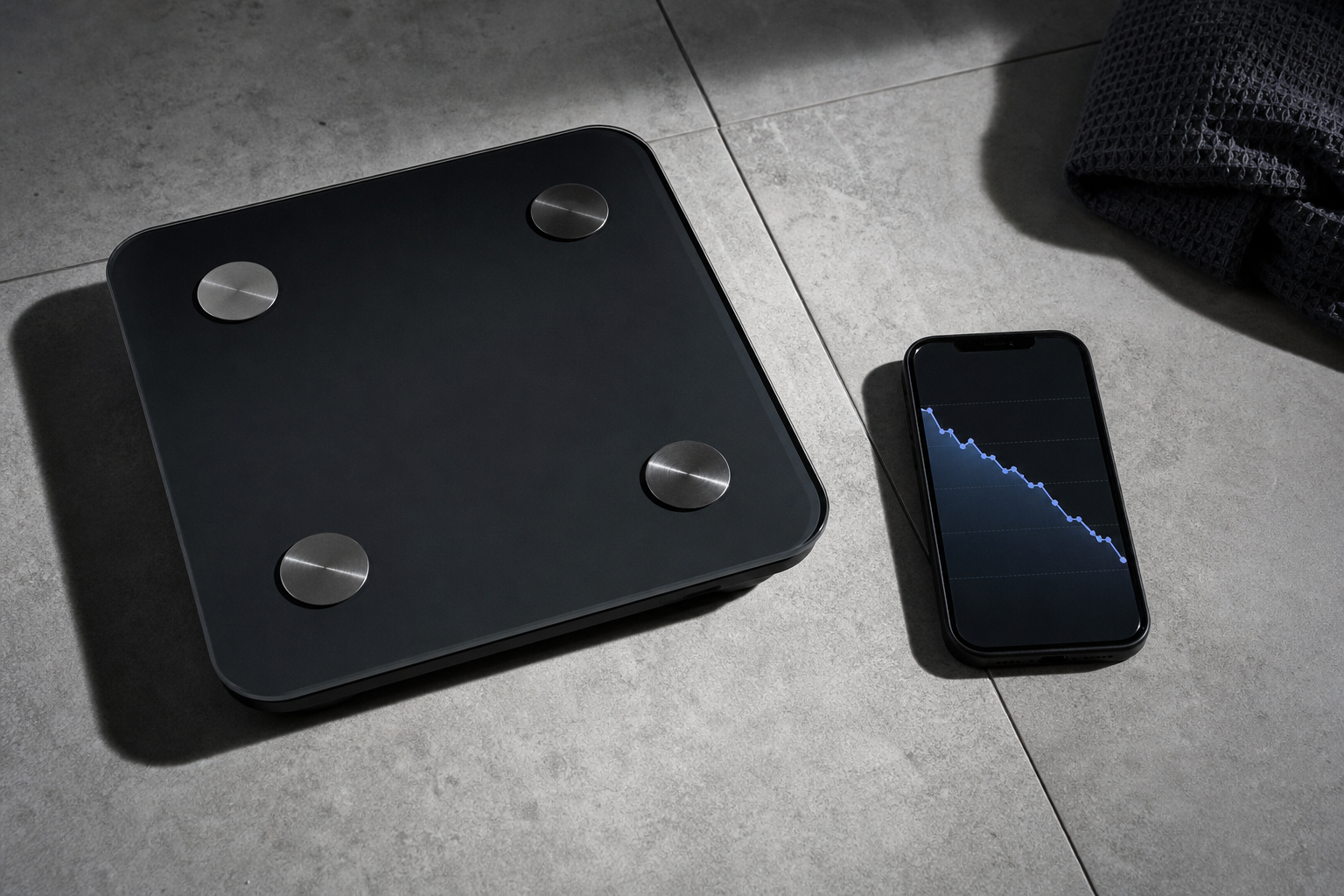
MacroFactor is built around one idea: work out what you actually burn from what you log and how your weight trends, then move the targets to match. For a lifter running a cut or a bulk and willing to log every day, that is the most useful design on our shortlist. There is no free plan, $71.99 a year is the highest stated annual price here, and the method needs consistent logging and frequent weigh-ins to work.
The sheet
Everything on this page comes from what MacroFactor's maker publishes; There is no free plan. The subscription is $71.99 a year, $6.00 a month, the highest stated annual price on our shortlist. The app runs on iOS and Android and carries no ads. Its core is an expenditure estimate built from logged intake and weight trend, which drives calorie and macro targets that are revised at a weekly check-in.
What the sheet states
MacroFactor has no free plan. The subscription is $71.99 a year, which is $6.00 a month and the highest stated annual price on our shortlist: $12 more than Cronometer Gold and $37 more than PlateLens Premium. The app runs on iOS and Android and carries no ads.
What the money buys is a method. Most calorie counters take a target, from a formula or from you, and leave it there until you change it. MacroFactor treats the target as something to be measured. It takes two inputs, what you log and what you weigh, and works out what your body must be spending for the two to agree. If you log 2,300 kcal a day for three weeks and your weight trend holds flat, your expenditure is about 2,300 kcal. If the trend falls, it is higher. From that estimate it sets calorie and macro targets for the goal you chose, and revises them at a weekly check-in.
That is the whole product. The food log exists to feed the estimate, and the estimate exists to move the targets.
What to watch
No free plan. Every other app in our top five has a free tier to fall back on. If the subscription lapses here, the method stops. Price that in: a cut or a bulk is a project of months, and the cost is $71.99 a year whether the project takes twelve weeks or twelve months.
The method rewards consistency, not perfection. This is the most useful thing to understand before buying. Because MacroFactor calibrates to your log, a bias that is the same every day mostly washes out. Suppose you miss about 200 kcal a day, every day: the cooking oil, the milk in the coffee. The app sees a flat weight trend at a logged 2,100 kcal and sets your maintenance at about 2,100. Your targets are then expressed in your own logging currency, and a deficit against them is still a deficit. What the method cannot absorb is inconsistency: careful logging on weekdays, nothing on Saturday. Then the estimate drifts with your habits, not your body.
Scale weight is noisy. Day-to-day bodyweight can swing by a kilo or more with water, salt, glycogen and gut content. MacroFactor works from the trend, not the day, which is right, but a trend needs data points. Weighing in most mornings, same time, same conditions, is part of the price of using it.
It is slow to respond, by design. The rule of thumb is about 7,700 kcal per kilo of body fat. It is an approximation, but it shows the scale: a 300 kcal daily gap moves weight by roughly a quarter of a kilo a week, which is smaller than the daily noise. Expect the estimate to need a few weeks before it settles, and do not expect it to react to one big weekend.
The targets chase the goal you set. The app will pursue whatever rate of loss or gain you choose, so choose it with care. For a cut that keeps muscle, the range usually advised is 0.5% to 1% of bodyweight a week (Helms and colleagues, Journal of the International Society of Sports Nutrition, 2014). Faster rates cost more of it.
Accuracy. MacroFactor measured on the weighed protocol with the rest of the list; the figure sits in the spec table above and comes from the same 180-meal and 231-meal rounds. The method is in our guide to calorie app accuracy.
Read the privacy label. Daily food logs plus daily weights are a detailed health record. Check the App Store privacy label or the Google Play data-safety section before signing up.
Who it is for
Lifters with a plan. Someone running a twelve-week cut before a meet, or a slow bulk through an off-season, who will log every day and weigh in most mornings, gets the most out of MacroFactor. The weekly check-in does what a coach would otherwise do with a spreadsheet: look at intake, look at the trend, adjust the number.
People whose maintenance calories never match the calculators. The equations behind most targets are population averages, and individuals sit well either side of them. MacroFactor replaces the equation with your own data.
People who will pay for no ads and a narrow, single-purpose tool.
It suits less well anyone who wants a free tier: PlateLens and Cronometer both have one. It suits less well anyone who logs in bursts, because the method depends on the days you do not log as much as the days you do. And it is not the right tool for anyone for whom daily weighing and close tracking feed anxiety or disordered eating; that conversation belongs with a doctor or dietitian, not an app.
The verdict
MacroFactor is the only app on our shortlist whose main product is the target rather than the log, and for a planned cut or bulk that is the most useful design here. It turns a consistent logging habit into an estimate of what you actually burn, and it forgives a steady bias that would quietly wreck a fixed target. The cons are printed: no free plan, $71.99 a year as the highest stated annual price on the list, and a method that needs daily logging and frequent weigh-ins to work. Eight point seven: build 9.0, value 8.2, use 8.9.
Specs and measurements
| Measure | Value |
|---|---|
| Measured error | ±5.0% (weighed protocol) |
| Price | $71.99 a year, stated |
| Free plan | None, stated |
| Nutrients tracked | Macros, fiber and 30+ micronutrients, stated |
| Platforms | iOS, Android, stated |
| Logging accuracy | Not tested by the desk; no figure printed (see our calorie app accuracy guide) |
Pros and cons
Pros
- Targets revised weekly from your own logged intake and weight trend
- Tolerates a consistent logging bias, because it calibrates to your log
- No ads
Cons
- No free plan
- $71.99 a year, the highest stated annual price on the shortlist
- Needs daily logging and frequent weigh-ins to work
How we scored
The unit went through the timed pass and the price was checked against the seller, then scored against the limits we hold all nutrition to. The scores come from those numbers, not from the box.
How we scored: full protocol and instruments →Written by
Head tester
Fifteen years coaching powerlifting and strongman. Writes the load protocols and the safety rules, and stops a test when one of them says so.
How Matt tests →Spotted a wrong number? Tell the desk. Fixed within two business days and logged on the corrections page.