Rogue Calibrated KG Steel Plates 2.0 (Black)
Rogue's Calibrated KG Steel Plates 2.0 in black, judged on Rogue's own spec sheet and list price: ±10 g per plate, a diameter published for every size, $263 for a 20 kg pair. A well-specified plate that prints no width and no warranty, and costs more per kilo than a rival sold to the same tolerance.
By Cole Ferraro, CPT, equipment tester
- Sheet checked
- Published
- Updated
Affiliate disclosure The buy link on this page may pay us a commission. Commission never changes a score, a rank or a printed con. Full policy.
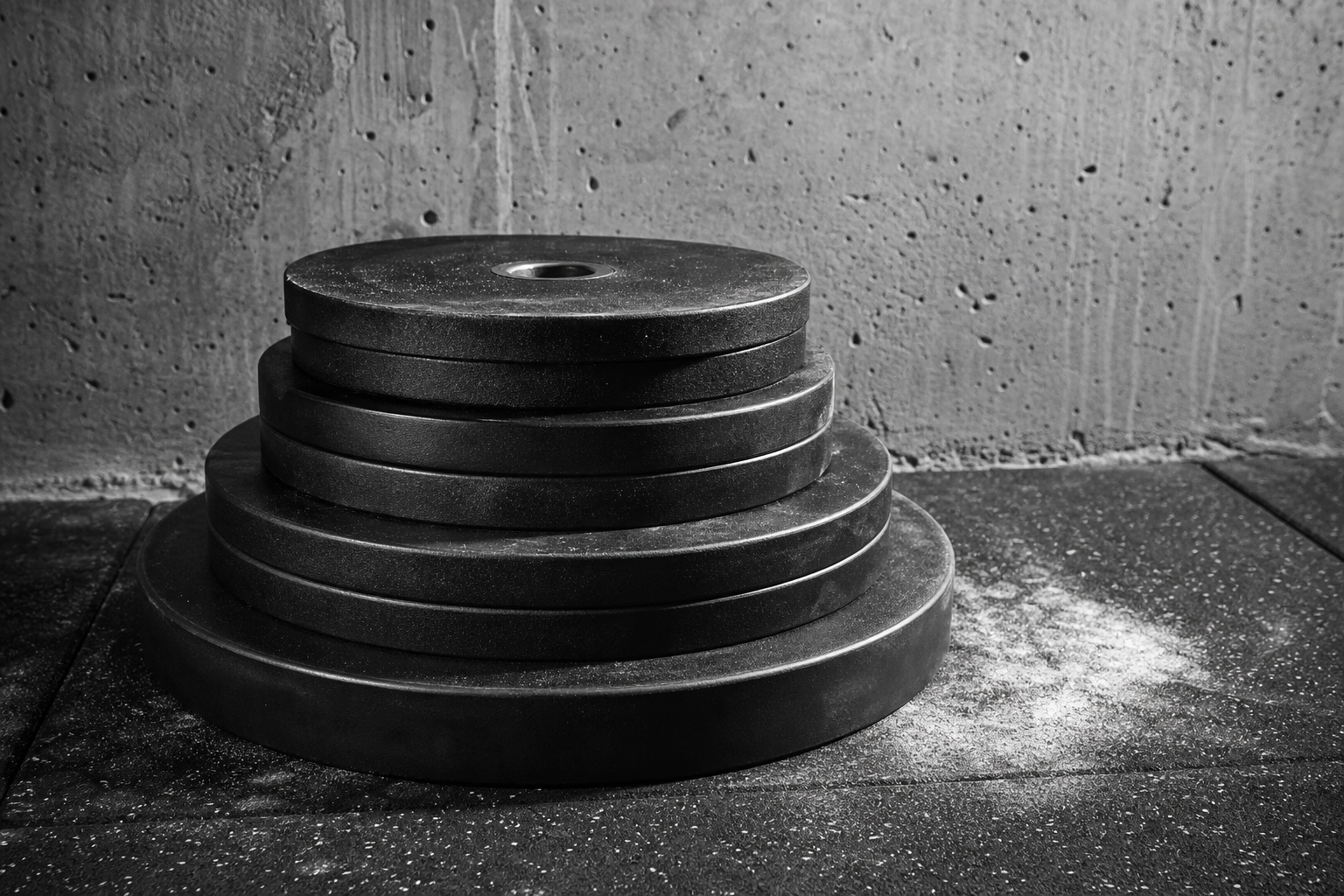
Verdict
Rogue prints ±10 g per plate, a 50.40 mm collar opening and a diameter for every size down to the 0.25 kg change plate, which is everything a calibrated plate needs to promise. It prints no width and no warranty term, and at $6.58 a kilo it costs more than Bells of Steel's calibrated plates sold to the same ±10 g. Lower it; never drop it.
The sheet
Everything on this page comes from Rogue's product page and price list, read on 25 November 2026; nothing was weighed or loaded by the desk. Rogue states ±10 g per plate, which is 0.05% at 20 kg and about a sixth of what the IPF allows on a 25 kg disc. The collar opening is 50.40 mm. Diameters run 450 mm at 25 and 20 kg, 400 mm at 15, 325 mm at 10 and 228 mm at 5, and calibrated change plates continue to 0.25 kg. Plate width and warranty are not on the page. A 20 kg pair in black was $263 before shipping, $6.58 a kilo.
What the maker states
This review reads Rogue’s sheet and price list. Nothing in it was weighed, loaded or dropped by the desk: the figures are Rogue’s, read on 25 November 2026, and the scores at the end are a judgement on those figures and the price.
Two generations of plate share the name. The original Calibrated KG Steel Plates are listed as sold out. The 2.0 is the current line, sold in black or chrome as two separate listings. Black is the cheaper: $263 for a 20 kg pair and $328 for a 25 kg pair, before shipping. Chrome is $298 and $368 for the same pairs. This page covers the black.
The figure the plate is sold on is the tolerance. Rogue says each plate is machine calibrated to within ±10 g of its face value. On a 20 kg plate that is 0.05%. The benchmark calibrated plates are held against is the IPF’s, and its table lets a 25 kg disc sit anywhere from 24.9375 to 25.0625 kg, 62.5 g either way, while a 2.5 kg disc gets 10 g (IPF Technical Rulebook, effective 1 March 2026). Rogue’s promise is about a sixth of the federation’s window on the big plates and equal to it on the small ones.
What that buys is arithmetic. A 180 kg deadlift on a 20 kg bar is eight 20 kg plates. If every one of them sat at the edge of Rogue’s figure, all in the same direction, the bar would be 80 g off: 0.04%. The same eight plates made to ±1%, the figure on most training bumpers, could miss by 1.6 kg. Most home lifters will never feel 1.6 kg. A lifter rehearsing meet attempts to the kilo will want it gone.
The collar opening is 50.40 mm. An Olympic sleeve is nominally 50 mm, so the plate has 0.4 mm of clearance: enough to slide on, tight enough not to rattle. A sleeve that runs over size will show it first with calibrated plates.
Diameters are published for every size: 450 mm for the 25 and 20 kg plates, 400 mm for the 15, 325 mm for the 10, 228 mm for the 5, 190 mm for the 2.5 and 160 mm for the 1.25. Rogue sells calibrated change plates down to 0.25 kg, 112 mm across, so the whole stack can come from one maker.
What to watch
Width. Rogue does not print how thick each plate is, and width is the figure that decides how much load fits on a sleeve. Thin plates are the main argument for calibrated steel in a home gym. The claim is plausible: steel is five to eight times denser than bumper rubber, so the same mass takes a fraction of the sleeve. But a buyer planning for 300 kg should not have to take it on faith. Ask Rogue for the width of the 25 kg plate before ordering a deep stack of them.
Warranty. The product page does not state one. Bells of Steel prints a limited lifetime warranty on its calibrated plates, made to the same ±10 g. Eleiko prints ten years on its competition bumpers. Steel plates seldom fail in ways a warranty would cover, but an order of several hundred dollars deserves a stated term.
Price per kilo. At $263, a 20 kg pair costs $6.58 a kilo. Bells of Steel’s Calibrated Powerlifting Plates (KG) print the same ±10 g and cost $237.99 a pair, $5.95 a kilo. Titan’s Elite Competition Plates, rubber but also ±10 g, come to $6.00 a kilo bought as single 20 kg plates. Rogue’s advantage on paper is the material: it states steel, where Bells of Steel states machined iron. Cast iron is more brittle than steel, which counts on the day a plate slides off a rack. Whether that is worth 63 cents a kilo is a judgement the sheets cannot settle for you.
Dropping. These plates are made to be set down. A deadlift released from lockout puts bare steel on whatever is underneath, and a bar dumped from overhead with steel on it damages the floor, the plates and the sleeves. If the program has cleans or snatches in it, the steel goes on outside bumpers or stays on the rack.
The listing. The sold-out original still turns up in searches, at an older and lower price. Check that the page says 2.0, and that the finish is the one intended, before paying.
Who it is for
Powerlifters who train for a meet and want the home bar loaded to within 10 g a plate. Lifters whose deadlift has outgrown the sleeve space bumpers leave, provided the width Rogue does not publish is as thin as calibrated steel usually is. Anyone who wants numbers that agree with a competition platform and prefers to buy them from Rogue.
It is the wrong plate for anyone who lets go of the bar. It is a debatable one for a buyer who would take the same printed tolerance for about $25 less a pair, from a maker that also prints its warranty.
The verdict
On paper this is a well-specified calibrated plate: ±10 g, a diameter for every size, a 50.40 mm bore and a change-plate line to 0.25 kg. Our scores are an editorial reading of the spec sheet and the list price, not test results. Build rates the stated tolerance, material and warranty, value sets the price per kilo against them, and use covers sleeve space, whether the plate can be dropped and what can be ordered. Rogue gives up value to a cheaper plate with the same tolerance, and build for leaving width and warranty off the page. 8.4.
Specs and measurements
| Measure | Value |
|---|---|
| Weight tolerance | ±10 g per plate, stated |
| Collar opening | 50.40 mm, stated |
| Diameter by plate | 25 and 20 kg 450 mm; 15 kg 400 mm; 10 kg 325 mm; 5 kg 228 mm; 2.5 kg 190 mm; 1.25 kg 160 mm, stated |
| Width by plate | Not published |
| Material | Steel, machine calibrated, stated |
| Finish | Black; chrome is a separate listing at $298 per 20 kg pair |
| Warranty | Not stated on the product page |
| Price, 20 kg pair | $263 before shipping, $6.58 per kg (Rogue US store, 2026-11-25) |
Pros and cons
Pros
- ±10 g per plate stated, a twentieth of the ±1% printed on training plates at 20 kg
- A diameter published for every size, 450 mm at 20 and 25 kg
- Calibrated change plates down to 0.25 kg from the same maker
Cons
- $6.58 a kilo for a 20 kg pair, against $5.95 for Bells of Steel plates with the same stated tolerance
- No plate width and no warranty term on the product page
- Steel: made to be lowered, not dropped
How we scored
Figures from the maker sheet and the price page, used on the platform, then loaded against the pass limits we hold all plates to. The scores come from those numbers, not from the box.
- Mass against nominal, mean of three tared weighings Within 0.25% of nominal IPF rules
- Bumper drop test, 500 drops from 1.2 m onto the pit Hub intact, no separation Desk limit
Written by
Equipment tester
Former competitive powerlifter, 890 kg total. Runs the bar, plate and rack tests, and does most of the lifting on platform A.
How Cole tests →Spotted a wrong number? Tell the desk. Fixed within two business days and logged on the corrections page.