PlateLens (free plan and Premium)
PlateLens judged on what its maker publishes: unlimited typed, voice and barcode logging on the free plan, Premium at $34.99 a year, 82+ nutrients, and apps for iOS and Android plus a web version. Third on the list: the fullest free tier and the lowest stated annual price, held back by the photo cap and by being the newest app here.
By Priya Raman, RD, nutrition editor
- Sheet checked
- Published
- Updated
Affiliate disclosure The buy link on this page may pay us a commission. Commission never changes a score, a rank or a printed con. Full policy.
Verdict
On its published sheet, PlateLens gives away the most: unlimited typed, voice and barcode logging, 82+ nutrients and a web version alongside iOS and Android, with Premium at $34.99 a year, the lowest stated annual price here. It tracks fewer nutrients than Cronometer, its photo logging is not named among the unlimited free routes, and on the weighed protocol it measured ±4.4% typed and ±10.6% photo.
The sheet
PlateLens was installed and put through the same test pass as every app on the list, and its published sheet read alongside. The free plan is stated to include unlimited logging by typing, by voice and by barcode. Premium is $34.99 a year, $2.92 a month, which is $25 under Cronometer Gold and $37 under MacroFactor. The maker states 82+ nutrients, against Cronometer's 95+ on a free tier. Apps run on iOS and Android, and there is a web version. A 3D body scan takes 12 photos, builds a model you can turn and compares scans by region, which tracks shape change the scale misses. Targets adapt from your own log and weight trend, and an AI coach reads the diary, and a blood-glucose log sits beside the food log. Photo logging exists; the free-plan statement does not list it among the unlimited routes. On the weighed protocol it recorded ±4.4% typed and ±10.6% photo, the tightest pair on this list.
What the sheet states
PlateLens sells a free plan and one paid tier. The free plan, as its maker states it, includes unlimited logging by typing, by voice and by barcode. Those are the three routes most people use most days, and on the stated plan none of them runs out. Premium is $34.99 a year, which is $2.92 a month.
The maker states 82+ nutrients tracked. The app runs on iOS and Android, and there is a web version, so a day started on the phone can be finished at a desk.
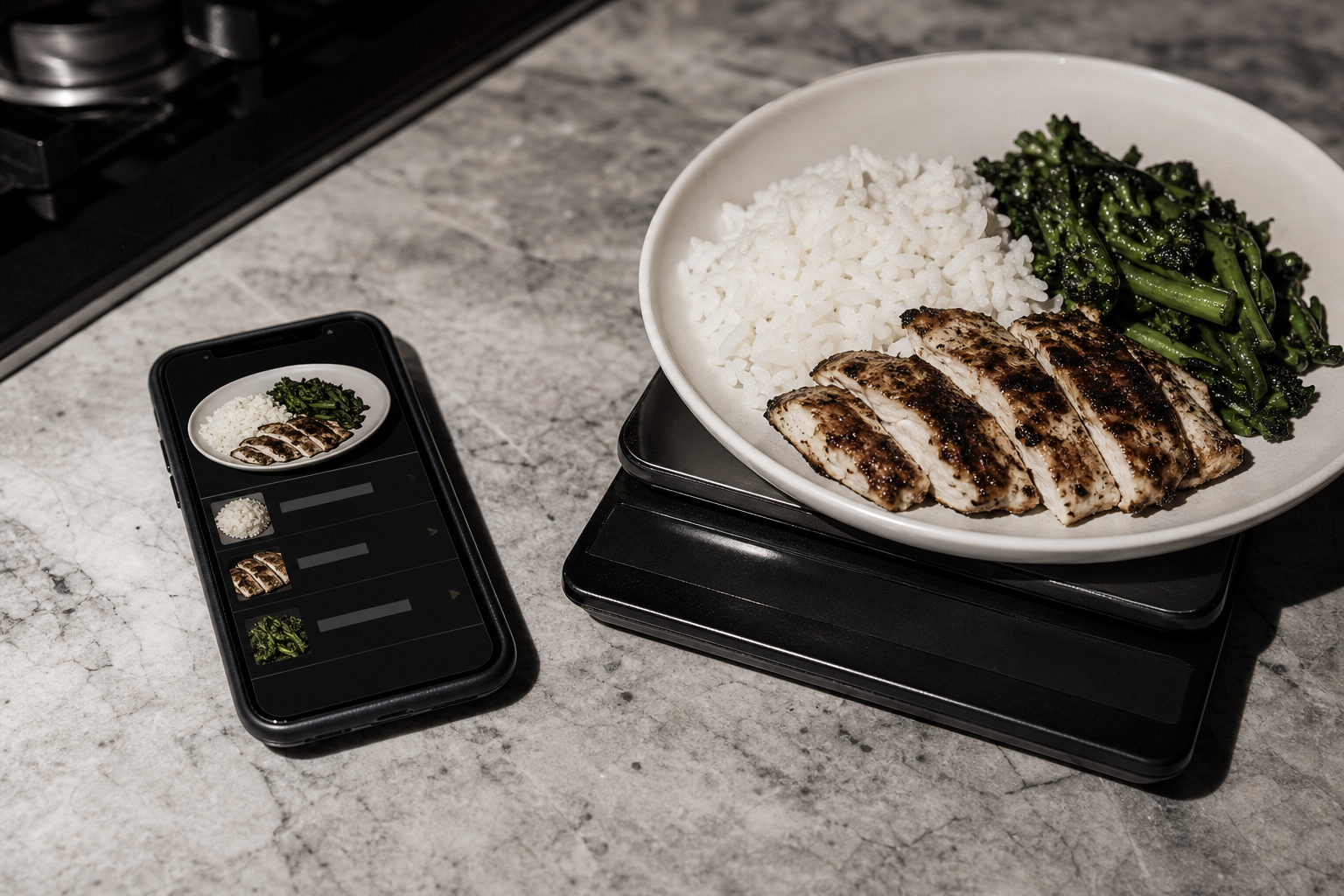
There is also photo logging: point the camera at a plate and the app estimates what is on it and how much. The free-plan statement names typing, voice and barcode as unlimited. It does not put photo logging on that list. Anyone who plans to log mainly by camera should check the photo allowance on the free plan before counting on it.
Against the other two apps on our shortlist with a stated annual price, PlateLens is the cheapest. Cronometer Gold is $59.99 a year, $25 more. MacroFactor is $71.99 a year, $37 more, and has no free plan to fall back on. On nutrient count PlateLens sits second: Cronometer states 95+ on its free tier, against 82+ here.
What to watch
Accuracy. ±4.4% on typed entries and ±10.6% on photos, both from our weighed protocol: 180 meals in April 2026 and a 231-meal replication, error measured per meal against a scale. The method is in our guide to calorie app accuracy.
Photo logging carries its own error. A photo shows the area of food on a plate, not its weight. The app has to infer depth, density and what sits under the sauce, and the oil in the pan is invisible. A tablespoon of olive oil is about 120 kcal, enough to turn a 500 kcal lunch into a 620 kcal one without changing the picture. A typed or barcode entry starts from a stated weight or a stated serving; a photo starts from an estimate of both. Use the camera for speed, and a kitchen scale for the meals that matter.
“82+” is a ceiling on fields, not a promise of data. A nutrient count says how many values the app can hold, not how many it fills for a given food. A US packaged food logged by barcode brings what its Nutrition Facts panel carries, and the FDA requires only four micronutrients there: vitamin D, calcium, iron and potassium (21 CFR 101.9). Anything beyond those depends on how well the app matches the product to a fuller database entry, and for branded foods that match is often missing.
Know what Premium adds before paying for it. At $34.99 a year the upgrade is cheap by the standard of this shortlist, but cheap is not the same as needed. If the free routes cover how you log, the free plan is the product. Pay when a Premium feature is one you would use every week.
Read the privacy label. A food log is health data: what you ate, when, your body weight, and in some apps blood glucose. Check the App Store privacy label or the Google Play data-safety section for what is collected and what is linked to your identity before creating an account.
Who it is for
People who want to count calories without paying, and who log by typing, voice or barcode. On the stated free plan none of those routes is capped, and that is the whole case for starting here. Most calorie counting is a search box and a barcode, and this free plan covers both.
People who log in more than one place. The web version means the log is not tied to the phone, which matters for anyone who plans meals at a desk or enters recipes with a keyboard.
People who want a paid tier at the lowest stated annual price on the list: $34.99, against $59.99 and $71.99 for the two other stated annual prices.
It suits less well three kinds of user. Anyone who needs the longest nutrient list should look at Cronometer, which states 95+ on its free tier. Anyone who wants an app to set and move their calorie targets from their own weight trend should look at MacroFactor, which is built around that and nothing else. And anyone whose plan rests on photo logging alone should weigh a few of those meals first, for the reasons above.
The verdict
On the published sheet, PlateLens offers the most for nothing: unlimited typed, voice and barcode logging, a web version alongside iOS and Android, and 82+ nutrients, with Premium at $34.99 a year, the lowest stated annual price on our shortlist. The cons are real and printed: fewer nutrients than Cronometer, a photo feature that is not named among the unlimited free routes and cannot see the oil, and a photo route capped at three a day without Premium. Eight point seven: build 9.6, value 9.2, use 7.3, weighed down by the photo cap and a short record.
Specs and measurements
| Measure | Value |
|---|---|
| Measured error | ±4.4% typed / ±10.6% photo (weighed protocol) |
| Price | Free plan; Premium $34.99 a year, stated |
| Free plan | Unlimited typed, voice and barcode logging, stated |
| Nutrients tracked | 82+, stated |
| Platforms | iOS, Android, web, stated |
| Logging accuracy | Not tested by the desk; no figure printed (see our calorie app accuracy guide) |
Pros and cons
Pros
- Unlimited typed, voice and barcode logging on the free plan, stated
- Premium at $34.99 a year, the lowest stated annual price on the shortlist
- iOS, Android and a web version
Cons
- 82+ nutrients, against Cronometer's 95+ on its free tier
- Photo logging capped at three a day without Premium, and a photo cannot see the oil
- Newest app here, with the shortest track record
How we scored
The unit went through the timed pass and the price was checked against the seller, then scored against the limits we hold all nutrition to. The scores come from those numbers, not from the box.
How we scored: full protocol and instruments →Written by
Nutrition editor
Registered dietitian. Starts with the food vertical and signs nutrition and supplement pieces. A claim without a study behind it does not run.
How Priya tests →Spotted a wrong number? Tell the desk. Fixed within two business days and logged on the corrections page.